
How often should you go to the dentist?
The real answer, and why it is not the same for everyone
The six-month rule is one of those dental facts that everyone knows. Go to the dentist twice a year. It has the quality of something that has been true for so long that nobody questions it.
Except it is not actually a clinical standard. It is a starting point that applies to a certain type of patient, and it does not apply universally. Depending on your individual risk profile, the clinically appropriate interval between dental examinations could be three months, or it could be 24 months. The answer is not the same for everyone, and understanding what drives it gives you a much more accurate picture of what your own attendance should look like.
How often should you go to the dentist is a question with a genuinely personalised answer, determined by your history of decay and gum disease, your lifestyle factors, your medications, your systemic health, and what is found at each dental examination. This article explains how that determination is made, what high-risk and low-risk patients look like, and what is actually included in a proper dental check-up.
At Face Dental in Coventry, a practice built on two generations of expertise, Dr Abdul Osman GDC: 231996, international lecturer for the ITI and BAIRD and key opinion leader for Bredent copaSKY implants and Meisinger instruments, leads a team where recall intervals are determined by clinical assessment, not habit.
Where the six-month rule came from, and why it does not apply universally
The twice-yearly appointment became culturally embedded largely through dental advertising in the mid-twentieth century. The six-month recall became a business model before it became a clinical standard.
The clinical picture is different. NICE (the National Institute for Health and Care Excellence) published guidance on the recall interval that is explicit: the interval between routine dental examinations should be determined on an individual basis by the clinician at each appointment, based on the patient’s risk of developing oral disease. The minimum interval is three months; the maximum is 24 months.
The important implication: a healthy young adult with no history of decay or gum disease and a consistently good home care routine does not need to attend every six months. Every twelve to twenty-four months may be entirely appropriate. A patient with active gum disease, a high decay rate, diabetes or dry mouth from medication may need to attend every three months to keep disease from progressing unchecked.
Neither is the “correct” answer. Both are clinically appropriate for their respective patients.
The factors that determine your recall interval
Decay history
A patient who has had multiple cavities in the past has demonstrated that their oral environment allows decay to develop. Whether this is due to diet (frequency of sugar exposure), salivary composition, specific bacterial colonisation, or oral hygiene gaps, the pattern is informative. These patients benefit from shorter intervals because catching new decay before it progresses significantly is a clinical priority.
A patient who has never had a filling and whose diet, hygiene and biological makeup produce no cavities has no equivalent urgency for frequent detection.
Gum disease history and current status
Gum disease is the most significant variable in determining recall frequency. Patients with established periodontitis need professional maintenance appointments at three to four monthly intervals to prevent reactivation of the disease. The bacteria responsible for periodontitis re-colonise professionally cleaned surfaces within weeks. Without regular removal, the disease resumes.
Patients whose gums are consistently healthy and who have never had significant periodontal disease are at lower risk of the same progression and can attend less frequently.
Smoking
Smoking is a major risk factor for gum disease, oral cancer, and impaired healing. It suppresses gum bleeding, making disease harder to detect at home, while simultaneously driving faster bone destruction. Smokers benefit from more frequent clinical monitoring.
Diabetes
The bidirectional relationship between diabetes and gum disease is one of the most well-evidenced associations in dental medicine. Poorly controlled diabetes accelerates gum disease. Gum disease impairs glycaemic control. Diabetic patients, particularly those with poorly controlled blood sugar, should be seen more frequently.
Medications causing dry mouth
Over 400 commonly prescribed medications list dry mouth (xerostomia) as a side effect. Saliva is the mouth’s primary defence against decay and gum disease: it neutralises acids, delivers minerals to enamel surfaces, and suppresses pathogenic bacteria. Patients with significant medication-induced dry mouth experience dramatically elevated decay rates and benefit from shorter recall intervals and professional fluoride application.
Age and developmental stage
Children and adolescents are in a period of significant dental change: primary teeth erupting and being lost, permanent teeth erupting, the development of habits and dietary patterns that may accelerate disease. More frequent review during these periods catches developmental issues, eruption problems and early decay at a stage where intervention is most effective.
Older adults face an increasing risk of root surface decay as gums naturally recede with age, and often have more complex medical histories and medication lists that affect oral health
A practical guide: how often different patients typically need to attend
The table below gives a practical overview of the typical recall intervals for different patient profiles. These are starting points: the actual interval for any individual patient is determined at each dental examination based on current clinical findings.
Patient profile | Typical recall interval |
Healthy adult, no decay history, excellent home care | 12–24 months |
Healthy adult, no gum disease, some minor decay history | 6–12 months |
Patient with history of moderate decay | 6 months |
Patient with active or recently treated gum disease | 3–4 months |
Diabetic patient (poorly controlled) | 3–4 months |
Smoker with gum disease | 3–4 months |
Dry mouth from medication | 3–6 months |
Child during mixed dentition (age 6–12) | 6–12 months depending on risk |
Patient on bisphosphonate medication | 6 months (surgical planning) |
Patient completing orthodontic treatment | 6 months |
Post-cancer treatment (head and neck) | 3–6 months |
This is not an exhaustive list, and the appropriate interval is always confirmed by the clinical team at each visit based on what is found at that appointment.
What a dental examination actually includes
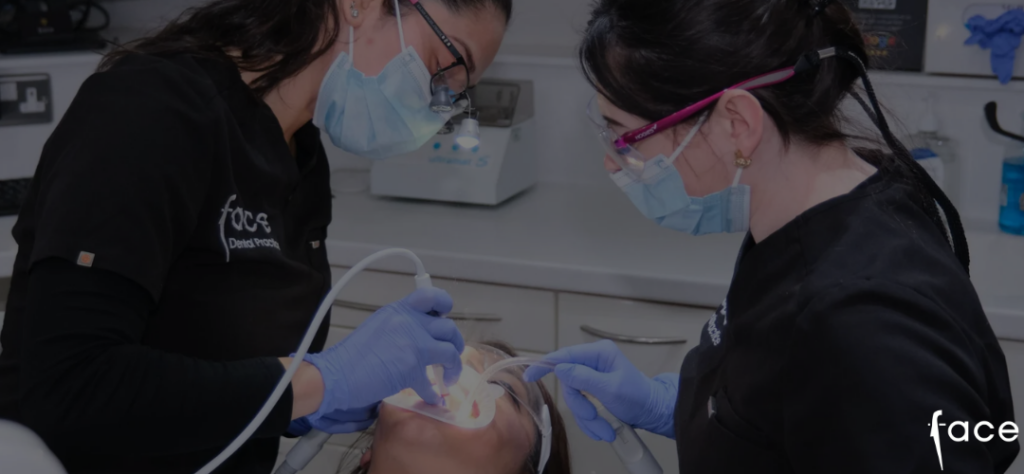
Understanding how often should you go to the dentist is partly about understanding what the appointment you are timing is actually doing. A proper dental examination is not simply a dentist looking at your teeth for five minutes. It is a structured clinical assessment covering multiple systems.
Medical history review
Every dental examination begins with a review of medical history and any changes since the previous visit. Medical conditions, new medications, changes in general health and lifestyle changes are all clinically relevant and affect both the assessment and any treatment decisions.
Radiographic assessment
Dental X-rays are taken at appropriate intervals (typically bitewing X-rays every 12 to 24 months for most adults) to detect interproximal decay (between the teeth, invisible to the naked eye), assess bone levels around the teeth, and evaluate the condition of existing restorations. No visual examination of the tooth surface can replace what X-rays reveal about what is happening between and within the teeth.
Soft tissue examination
Every thorough dental examination includes a systematic check of the soft tissues: the lips, cheeks, tongue (all surfaces), floor of the mouth, palate and oropharynx. The aim is to identify any abnormality in colour, texture or form that might indicate early pathology, including the early changes associated with oral cancer.
Oral cancer affects over 8,000 people in the UK annually. Early detection (when lesions are still localised and painless) produces significantly better outcomes than late detection. Regular dental examination is the primary mechanism for early detection: mouth cancer does not announce itself with early pain.
Periodontal assessment
Pocket depths around every tooth are measured using a periodontal probe, recorded and compared to previous findings. Bleeding on probing is assessed. Gum recession is measured. This systematic assessment detects gum disease at a stage where it can be treated effectively, before bone loss has progressed significantly.
Tooth-by-tooth examination
Each tooth is assessed individually: any cavities present, the condition of existing restorations, cracks or fracture lines, wear patterns indicating grinding or acid erosion, and sensitivity responses to thermal testing where indicated.
Bite and jaw joint assessment
The occlusion (how the teeth meet) and the jaw joints are assessed as part of the overall picture, particularly where wear patterns, clicking, or any jaw discomfort has been reported.
Treatment planning and discussion
The findings are explained clearly, all available options are described honestly, and a treatment plan is established that reflects the patient’s priorities and preferences. This is not a one-directional clinical pronouncement: it is a conversation.
The hygienist appointment: a different but equally important visit
A dental examination and a dental hygienist appointment are not the same thing, and they serve different clinical purposes. Both are important.
The dental hygienist appointment is specifically focused on the professional cleaning and maintenance of the teeth and gum tissue. It involves:
- Scaling to remove tartar (calculus) from the tooth surfaces above and below the gum line. Tartar cannot be removed by brushing and harbours the bacteria responsible for gum disease. Professional scaling is the only way to remove it.
- Air polishing or prophylaxis polish to remove surface staining and the biofilm layer that accumulates on enamel.
- Subgingival debridement for patients with gum disease: cleaning beneath the gum line to remove the deposits driving the disease from within the periodontal pockets.
- Personalised home care instruction: specific advice on which areas are being missed during home cleaning, what tools work best for the individual patient’s anatomy, and how to improve technique.
For patients with healthy gums and good home care, a hygienist appointment every six to twelve months alongside a check-up is typically appropriate. For patients with established gum disease, hygienist maintenance appointments every three to four months are the clinical standard, and these are often separate from check-up appointments with the dentist.
What happens if you attend less often than recommended
This is the honest part of the answer to how often should you go to the dentist, because the consequences of extending the interval beyond what is appropriate for your individual risk profile are not abstract.
Decay progresses in the absence of detection. A small cavity that costs a modest amount to fill with a composite restoration when caught at a check-up becomes a larger cavity approaching the nerve, requiring root canal treatment and a crown, if caught a year later. The delay in detection is directly proportional to the increase in treatment complexity and cost.
Gum disease advances silently. Early gum disease (gingivitis) is entirely reversible with professional treatment and improved home care. Periodontitis, the bone-destroying stage, is managed but not reversed: the bone lost to periodontitis does not grow back without surgical intervention. The earlier gum disease is identified and treated, the less bone is lost and the better the prognosis for the teeth.
Soft tissue changes are missed. Oral cancer lesions that are caught at an early dental examination, when they are still painless and localised, have dramatically better outcomes than lesions that are caught when they have become symptomatic. A missed check-up appointment is a missed soft tissue examination.
How to find the right interval for you
The most accurate answer to how often should you go to the dentist is: attend your next dental examination, let the clinical team assess all the relevant factors, and let that assessment determine the interval. The recall interval is communicated at the end of every check-up appointment, based on what was found and the patient’s individual profile.
At Face Dental in Coventry, dental examinations are thorough, unhurried and directed by clinical need rather than a fixed schedule. Dr Abdul Osman and the team assess every patient individually: the interval recommended for you is the one supported by your specific clinical picture, not a generic assumption.
To book a dental examination or discuss your recall interval, contact Face Dental at 76 Quinton Rd, Coventry, CV3 5FD, or call 02476 501 125.
In conclusion
How often should you go to the dentist is a question with a genuinely individual answer, ranging from three months for high-risk patients to twenty-four months for consistently low-risk patients. The six-month rule is a reasonable default but not a universal clinical standard.
What drives the interval is your history of decay and gum disease, your lifestyle, your medications, your systemic health and what is found at each clinical review. Regular dental examination catches problems at a stage where they are manageable. Extended intervals allow those same problems to progress to a point where they are considerably more complex and more expensive to address.
At Face Dental in Coventry, the answer to how often you should attend is worked out with you, not for you.
Disclaimer
The information in this article is intended for general educational guidance only and does not constitute personalised dental advice. For a proper assessment of your individual recall interval, please book an appointment with a qualified dental professional
Face Dental is a private dental practice at 76 Quinton Rd, Coventry, CV3 5FD, a family legacy built on two generations of expertise, led by Dr Abdul Osman GDC: 231996, international lecturer for the ITI and BAIRD and key opinion leader for Bredent copaSKY implants and Meisinger surgical instruments. We offer dental check-ups, dental hygienist appointments, Invisalign, composite bonding, porcelain veneers, teeth whitening, dental crowns, dental implants, smile makeovers, facial aesthetics and emergency appointments. Call 02476 501 125 or contact us online.
Frequently asked questions
How often should you go to the dentist if you have no problems?
The absence of symptoms does not mean the absence of pathology. Gum disease and early decay are both largely painless until advanced. If you have had consistently good check-ups with no new decay and healthy gums, your dentist may well recommend a 12 to 24 month interval between dental examinations. This is clinically appropriate for genuinely low-risk patients and not a sign of cutting corners.
Do I need to go to the dentist if I have no natural teeth?
Yes. The soft tissue examination for oral cancer is equally important regardless of whether natural teeth are present. The gum tissue, the palate, the cheeks, the tongue and the throat all remain at risk. Denture wearers also need their prosthetics assessed periodically for fit and condition, as the underlying bone changes over time. A dental check-up applies to everyone, not just those with natural teeth.
How often should children go to the dentist?
Children are generally seen every six to twelve months depending on the stage of dental development and their individual risk profile. During the mixed dentition period (age 6 to 12, when primary and permanent teeth coexist), monitoring eruption patterns, identifying early orthodontic concerns and catching decay in newly erupted permanent teeth are all clinical priorities. First visits should happen when the first tooth appears, or certainly by the first birthday. The dental hygienist appointment is also appropriate from an early age for professional cleaning and diet advice.
Is a dental examination at the hygienist the same as a check-up with the dentist?
No. A dental hygienist appointment is focused on professional cleaning and gum maintenance. A check-up (dental examination) with the dentist is a clinical assessment covering teeth, gums, soft tissues, bite, jaw joint and medical history, with diagnostic X-rays taken at appropriate intervals. Both are important, and they complement each other: the hygienist appointment maintains the clinical baseline between check-ups. At Face Dental, the team can advise on the most appropriate combination for your individual situation.
My last dental examination was two years ago. Should I be worried?
It depends on your risk profile. For a low-risk patient with no previous dental problems and good home care, a two-year interval may not have led to significant change. For a patient with gum disease, a high decay rate or other risk factors, a two-year gap is likely to have allowed some progression. The most useful step is to book a dental check-up as soon as possible, let the clinical team assess what is present, and establish the correct recall interval going forward. There is no benefit to further delay, regardless of how long the gap has been.