
First night after tooth extraction
An honest hour-by-hour guide, and the one thing most people are not told
Most articles about the first night after tooth extraction give you a list of things to avoid. No straws. No smoking. No rinsing. No hot drinks. Soft food only.
This one is going to do something different.
Yes, those instructions matter and they will be covered here in full. But what most people want, and what very few articles actually provide, is the narrative experience of the night itself: what you will feel at each stage as the anaesthetic wears off, what is normal and what is not, and how to make the night as manageable as possible when you are at home, slightly shaken, and wondering if everything is as it should be.
And then there is the other conversation: the one that begins the moment the tooth comes out, about what happens to the space where it used to be, and why the decision about what to do next is worth thinking about immediately rather than weeks later.
At Face Dental in Coventry, a practice built on two generations of expertise, led by Dr Abdul Osman GDC: 231996, this conversation about dental implants after extraction and the option of same day dental implants is one we have with every patient at the time of extraction, not as an afterthought months down the line. Here is the complete picture.
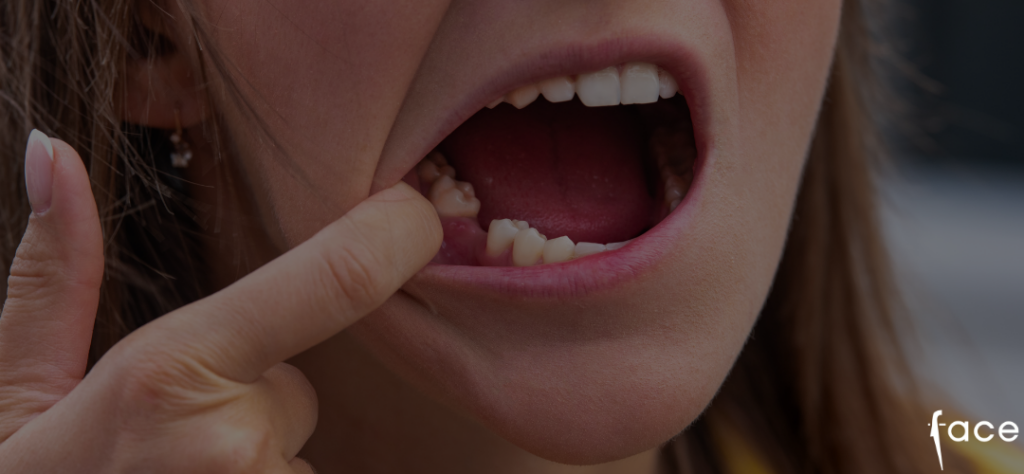
What actually happens during the procedure: why the first night feels the way it does
Understanding the first night starts with understanding what the body just went through.
When a tooth is extracted, the alveolar socket (the bony housing the root sat in) is left open. The surrounding gum tissue and bone have been physically stressed. Blood vessels have been disrupted. The inflammatory response, the body’s healing cascade, begins within minutes.
Local anaesthetic blocks the nerve signals in the area, so during the procedure you feel pressure, movement, and sometimes significant force (particularly for multi-rooted back teeth), but not pain. The anaesthetic does not, however, block the physical tissue response that has already begun beneath the numb surface.
When the anaesthetic wears off, those two things converge: you start to feel the area, and what you feel is the result of what the body is already doing to heal it. This is why the experience of the first night feels the way it does.
The first night after tooth extraction: hour by hour
Time after extraction | What is happening clinically | What you will feel |
0–1 hour | Blood clot forming in socket; area still fully numb | Pressure, numbness, awareness of gauze if placed |
1–2 hours | Anaesthetic beginning to wear off; early clot established | Returning sensation, early onset of dull ache |
2–4 hours | Inflammation building; clot consolidating; tissue beginning repair | Throbbing soreness, swelling beginning to develop |
4–8 hours | Peak acute inflammatory phase for most extractions | Most significant discomfort of the night; swelling visible |
8–24 hours | Inflammatory phase beginning to plateau; clot maturing | Discomfort beginning to reduce; swelling may still be present |
24–72 hours | Early granulation tissue forming; bone remodelling beginning | Significant improvement in most cases; soft diet still advised |
This table is a guide for a straightforward extraction. Complex extractions, surgical removals of impacted wisdom teeth, and extractions from infected sites follow a slower version of the same pattern.
The anaesthetic wearing off: the first hour to two hours
The single most important practical thing about the first night after tooth extraction is this: do not eat while you are numb.
Local anaesthetic for a lower back tooth (inferior alveolar nerve block) lasts two to four hours, sometimes longer. Anaesthetic for upper teeth tends to wear off more quickly, often within one to two hours.
While numb, you cannot feel where your cheek, lip and tongue are in relation to your teeth. Patients who eat while numb regularly bite their cheek or tongue badly enough to cause significant wounds, sometimes requiring their own clinical attention. They only discover it when the numbness wears off and the pain starts.
Drink water if you are thirsty. Room temperature water is fine. Avoid anything hot until you can feel the area properly again: you cannot gauge temperature accurately while numb and can burn soft tissue without realising.
This window, while the anaesthetic is still working, is actually a useful one: take your pain relief now, before the anaesthetic fully wears off. Ibuprofen (400mg with food, where appropriate) or paracetamol taken in this window reaches its active concentration in the bloodstream before the nerve becomes fully sensitive again, producing much better coverage of the initial pain period.
The gauze, the clot, and why both matter enormously
If gauze was placed over the socket, maintain gentle biting pressure on it for 30 to 45 minutes. It is there to help a stable blood clot form at the base of the socket.
That blood clot is the most important structure in your mouth for the next 24 hours. It is not debris. It is the biological scaffolding on which healing depends. The clot:
- Protects the exposed bone and nerve endings at the base of the socket from the oral environment
- Contains the growth factors that initiate tissue repair
- Forms the basis from which new granulation tissue and eventually bone will develop
Dry socket (alveolar osteitis) occurs when the clot is dislodged or fails to form properly, leaving the bone exposed. The pain is severe, characteristic and begins two to four days after extraction rather than immediately. It has a specific dull, radiating quality very different from the soreness of a healing socket.
The actions most commonly responsible for dry socket:
- Sucking through a straw (negative pressure in the oral cavity)
- Smoking (negative pressure and vasoconstriction impairing healing)
- Vigorous rinsing on the day of extraction
- Touching the socket with fingers or tongue repeatedly
- Alcohol (a vasodilator that increases bleeding risk and impairs healing)
Avoid all of the above for at least 48 hours. Straws and smoking should be avoided for at least five to seven days.
Managing the night: what actually works
Ibuprofen and paracetamol combined
The combination approach is the most clinically effective over-the-counter pain management for extraction sites. Ibuprofen (an NSAID) reduces the prostaglandin-mediated inflammation driving the pain. Paracetamol acts centrally. Staggering them (paracetamol at one time, ibuprofen three hours later) provides more sustained coverage than taking them simultaneously.
Standard adult doses apply. Do not exceed either medication’s recommended daily maximum. Take ibuprofen with food to protect the stomach lining.
If ibuprofen is contraindicated (asthma, peptic ulcer history, certain medications), paracetamol alone at full dose every six hours is the alternative.
Sleep position
Keeping the head elevated reduces blood pressure in the head, which reduces both bleeding risk and the throbbing intensity that makes night-time extraction pain feel worse. An extra pillow or two, or sleeping slightly reclined, makes a meaningful difference. Lying completely flat consistently worsens the throbbing in the first 24 to 48 hours.
Cold compress
A cold pack (ice wrapped in a cloth, never directly on skin) applied to the outside of the cheek for 15 to 20 minutes, removed for 20 minutes, then reapplied, helps reduce swelling in the first 24 hours. After 24 hours, warm (not hot) compresses encourage blood flow and further healing. Do not apply heat in the first 24 hours.
Diet
Soft, cool or room-temperature foods on the opposite side of the mouth from the extraction site. Soup (lukewarm), yoghurt, mashed potato, scrambled eggs, soft fruit. Avoid anything requiring the socket area to be put under pressure.
What to avoid explicitly
- Straws
- Smoking
- Alcohol
- Hot drinks for 24 hours
- Spitting forcefully or rinsing vigorously until the following day (a gentle salt water rinse after 24 hours is actually beneficial)
- Touching the socket with fingers or tongue
- Hard or crunchy foods near the socket
What is normal and what is not: symptoms assessed honestly
Normal:
Bleeding that is slow and oozy for the first few hours, staining saliva pink. Swelling developing progressively through the evening and sometimes overnight, peaking at 48 to 72 hours. Soreness that is at its worst in the first 24 hours and improves thereafter. Bruising developing on the cheek or jaw in the 24 to 48 hours following a complex extraction. A white appearance to the socket from day two onwards (this is normal granulation tissue forming, not infection).
Seek same-day care for:
Active bright red bleeding that is filling the mouth and not settling with direct gauze pressure. Severe, escalating pain that begins two to four days after the extraction rather than immediately (dry socket). Spreading swelling toward the jaw, neck or eye area. Fever alongside increasing rather than decreasing pain after day two. Difficulty swallowing or breathing alongside dental symptoms.
For urgent post-extraction concerns, the emergency dental team at Face Dental in Coventry is available for same-day assessment. Call 02476 501 125 or contact us online.
The thing most articles do not tell you: the clock has already started
Here is the part of the first night after tooth extraction that almost nobody discusses, because it feels like it can wait until later.
It cannot.
The moment a tooth is removed, the bone that surrounded its root begins to change. The process is called alveolar bone resorption, and it starts within the first days and weeks, not months. The bone that held the tooth root in place no longer receives the mechanical stimulation from biting forces that signals to the body to maintain it. Without that signal, the body removes the bone systematically.
In the first year after extraction, patients typically lose 25% or more of the bone volume in that area. In the first three months, the resorption is most rapid. The ridge that the root sat in flattens. The width reduces. The height drops.
This matters for several reasons that are entirely practical:
The adjacent teeth drift. The tooth behind the gap moves forward. The tooth in front moves back. The opposing tooth over-erupts. Bite changes follow. These changes are slow, so they feel like nothing is happening, but after a year or two they become clinically significant.
Implant placement becomes more complex. A dental implant placed three months after extraction requires implant placement in a site that has already lost bone volume. An implant placed at the same appointment as the extraction, into the fresh socket, uses the bone that is still present. Immediate placement avoids the bone loss window entirely.
This is the clinical logic behind same day dental implants: not just a matter of convenience, but a clinical protocol designed to use the existing bone before the body removes it.
Same day dental implants and immediate tooth extraction replacement: the clinical case
Tooth extraction immediate replacement is a well-established protocol, not an experimental shortcut. The published literature on immediate implant placement (Type 1 placement, as categorised in the ITI consensus) consistently demonstrates comparable or equivalent long-term success rates to delayed placement, with the additional advantages of:
- Preserving the existing bone volume and soft tissue architecture
- Reducing the overall treatment timeline
- Avoiding the psychological and functional impact of living with a gap
- Providing aesthetic results that closely mirror the natural tooth position
Same day dental implants are not possible in every extraction case. Active infection, insufficient bone volume, certain systemic conditions, and specific root and socket anatomy may contraindicate immediate placement. Where these factors are absent and the site is suitable, immediate placement is the protocol of choice.
At Face Dental in Coventry, dental implants after extraction are assessed and planned as part of the extraction process itself. Dr Abdul Osman GDC: 231996, who has lectured nationally for the ITI (International Team for Implantology) and BAIRD, serves as the key opinion leader and international lecturer for Bredent copaSKY implants, and holds the same role for Meisinger surgical instruments, leads every implant case with the clinical depth that this level of international recognition reflects.
The assessment of immediate implant suitability takes place at the tooth extraction consultation, not at a separate implant planning appointment months later. The question of tooth extraction immediate replacement is part of the initial clinical conversation.
Why routine care prevents extractions in the first place
The most effective way to avoid the first night after a tooth extraction is to not need an extraction in the first place. Regular dental check-ups identify decay at an early stage, when a filling rather than an extraction is the appropriate treatment. Regular dental hygienist appointments control gum disease before it destroys the bone that supports the teeth.
The sequence that most often leads to extraction is: missed check-up, undetected decay, cavity reaches nerve, abscess forms, tooth becomes unrestorable. None of these steps is inevitable. Each is interceptable at a much simpler and less disruptive point than extraction.
At Face Dental in Coventry, 76 Quinton Rd, CV3 5FD, the same clinical standards applied to implant surgery, check-ups and hygiene all reflect the practice’s commitment to keeping patients out of the extraction chair wherever clinically possible, and equipping them with the best possible options when an extraction becomes necessary.
In conclusion
The first night after tooth extraction is manageable, predictable and finite. The soreness peaks in the first 24 to 48 hours and reduces consistently thereafter. The blood clot is the priority for the first 24 hours: protect it by avoiding suction, smoking, vigorous rinsing and heat. Manage the pain with ibuprofen and paracetamol in combination, keep the head elevated and apply cold to the cheek.
The conversation about dental implants after extraction and same day dental implants belongs on that same day, not weeks later. The bone that needs to support an implant is present when the tooth comes out. It does not wait.
For tooth extraction immediate replacement assessment, a dental implant consultation at Face Dental includes everything needed to establish whether immediate placement is appropriate for your specific situation. Call us on 02476 501 125 or get in touch.
Disclaimer
The information in this article is intended for general educational guidance only and does not constitute personalised dental or medical advice. For concerns about tooth extraction or implant suitability, please book an appointment with a qualified dental professional for a proper clinical assessment.
Face Dental is a private dental practice at 76 Quinton Rd, Coventry, CV3 5FD, a family legacy built on two generations of expertise, led by Dr Abdul Osman GDC: 231996, international lecturer for the ITI and BAIRD and key opinion leader for Bredent copaSKY implants and Meisinger surgical instruments. We offer tooth extractions, dental implants, emergency dental care, dental check-ups, dental hygienist appointments, Invisalign, composite bonding, porcelain veneers, teeth whitening, dental crowns, smile makeovers and facial aesthetics. Call 02476 501 125 or contact us online.
Frequently asked questions
How bad is the first night after tooth extraction?
For a straightforward single-rooted tooth, most patients describe the first night as uncomfortable but entirely manageable with ibuprofen and paracetamol. The peak discomfort typically occurs in the hours after the anaesthetic wears off and gradually reduces from there. Complex surgical extractions (particularly of lower wisdom teeth) involve more significant swelling and a longer recovery period. Preparing in advance with soft foods, appropriate medication and an elevated sleeping position makes a considerable difference to the experience.
When can same day dental implants be placed?
Same day dental implants can be placed when the extraction socket is free of active infection, when there is sufficient bone volume and quality to achieve primary stability of the implant fixture, when the socket anatomy is appropriate for the implant diameter, and when the patient’s systemic health supports predictable healing. This is assessed at the extraction consultation at Face Dental in Coventry. Not every case is suitable for immediate placement, and where it is not, delayed placement following healing is planned.
What are the risks of not replacing a tooth immediately?
The most significant clinical risk of delayed tooth extraction immediate replacement is bone resorption: the jawbone that held the tooth root begins to reduce in volume within weeks, making implant placement more complex and sometimes requiring bone grafting. Adjacent teeth drift into the gap, changing the bite. The opposing tooth over-erupts. Over time, these changes compound and become increasingly difficult to fully reverse.
Is it safe to have dental implants placed at the same time as a tooth extraction?
Dental implants after extraction, placed at the same appointment, is a well-documented protocol with a long-term success rate comparable to delayed placement in appropriate cases. The key is patient and site selection, which is why a thorough assessment by a clinician with specific implant expertise is essential. Dr Abdul Osman GDC: 231996, whose credentials include ITI and BAIRD lecturing and key opinion leader roles for implant systems, leads all implant cases at Face Dental.
What does the recovery look like when a tooth extraction and implant are done on the same day?
The recovery from same-day extraction and implant placement is broadly similar to extraction alone in the first 24 to 48 hours: swelling, soreness and the need for soft diet and careful home management. The key difference is that a healing cap or temporary crown is in place over the implant, requiring extra care to avoid putting occlusal (biting) force on it during the osseointegration period. The full instructions for post-operative care and what to eat are provided at the appointment. For any concerns during recovery, the emergency dental team at Face Dental is available same-day.