
How to remove tartar from teeth
The honest answer, what actually works, and what does not
There is a lot of conflicting advice online about how to remove tartar from teeth at home. Baking soda. Oil pulling. Diluted hydrogen peroxide. Rubbing with orange peel. Some of these claim to dissolve tartar; others claim to scrape it off with daily brushing if you are thorough enough.
Here is the honest answer before anything else: once plaque has hardened into tartar, it cannot be removed at home. Not with baking soda, not with any toothpaste, not with any mouthwash, and not with more vigorous brushing. The only way to remove tartar that has already formed is with professional instruments used by a dentist or dental hygienist.
That is not a marketing line — it is a clinical fact rooted in what tartar actually is and what it takes to remove it.
What you can do at home is prevent plaque from becoming tartar in the first place — and that distinction matters enormously for your long-term oral health.
This guide covers both sides of the equation fully: what tartar is, why it cannot be removed without professional tools, what home methods genuinely do and do not achieve, how a professional clean works, and what a consistent home routine actually accomplishes. The goal is to give you a complete, honest picture — not to worry you, but to help you make better decisions about your teeth.
At Face Dental in Coventry — a practice built on two generations of expertise at 76 Quinton Rd, CV3 5FD — our dental hygienist provides the professional tartar removal that home care cannot replicate, alongside the personalised guidance that makes home care as effective as possible between appointments.
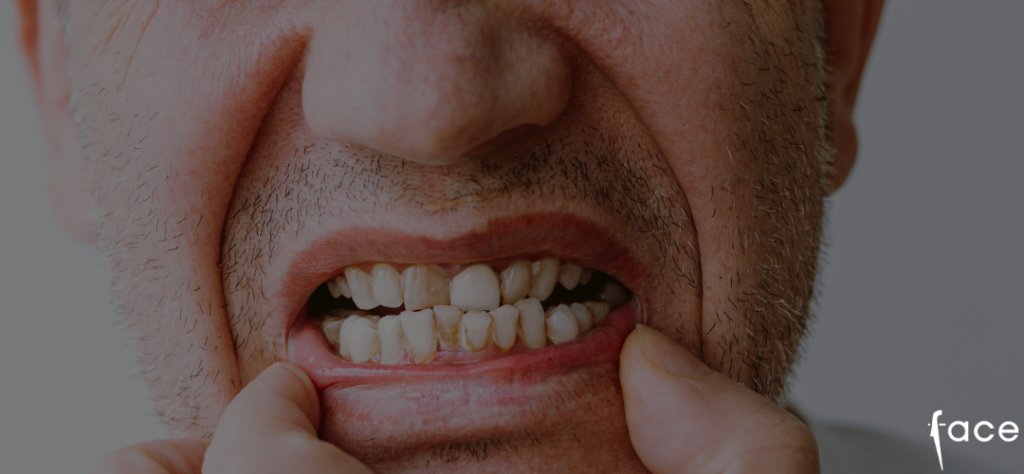
What tartar actually is — and why home removal is not possible
Plaque is a soft, sticky biofilm that forms continuously on the tooth surface. It consists of bacteria, their metabolic byproducts, salivary proteins and food debris. It is colourless when thin, white or cream-coloured when thicker. Most importantly, it is soft — which means it can be physically disrupted and removed by toothbrushing and interdental cleaning.
The problem starts when plaque is not removed within approximately 24 to 72 hours. Minerals present in saliva — calcium and phosphate ions — begin to deposit into the plaque matrix. Over days and weeks, this mineralisation process converts the soft plaque into a hard, calcified deposit: tartar, also called calculus.
The resulting material is essentially a mineralised calcium phosphate structure — physiochemically similar to the hydroxyapatite mineral that makes up tooth enamel. It is not soft, not soluble in any household chemical, and not susceptible to abrasive action from any brush or toothpaste. It adheres directly to the tooth surface and, once established, becomes progressively denser and harder over time.
This is the clinical reason how to remove tartar from teeth without a dentist is a question with a straightforward answer: you cannot. The hardness of the material and the need to remove it without damaging the tooth surface or gum tissue requires either ultrasonic instrumentation or precisely sharpened hand scalers, used with technique developed over years of clinical training.
No home remedy changes this. The reason these remedies persist online is partly because they do address plaque and surface staining — which is genuinely useful — but plaque removal is not the same as tartar removal.
The honest assessment: what home methods actually do
Method | What it actually does | Does it remove tartar? | Verdict |
Fluoride toothpaste (brushing) | Removes soft plaque, delivers fluoride to enamel, reduces acid damage | No | Essential — use twice daily |
Whitening toothpaste | Removes surface staining via mild abrasive action | No | Useful for maintaining appearance; not a substitute for hygiene |
Baking soda (sodium bicarbonate) | Mildly abrasive; neutralises acid; removes some surface staining | No | Some benefit for surface stain — will not touch tartar |
Oil pulling | Reduces certain bacterial populations in the saliva temporarily | No | Some marginal oral hygiene benefit; not evidence-based for tartar |
Diluted hydrogen peroxide rinse | Surface antiseptic effect; minor whitening of exposed enamel | No | Not safe for regular use without clinical guidance; no tartar effect |
Interdental brushes / floss | Removes interproximal plaque between teeth | No (but prevents formation) | Highly effective at preventing plaque becoming tartar in contact areas |
Tartar-control toothpastes (pyrophosphate) | Inhibits mineralisation of new plaque — slows tartar formation | Slightly (surface only, early stages) | Can slow formation but does not remove established tartar |
Mouthwash (antiseptic) | Reduces bacterial count temporarily | No | Useful supplement to brushing — not a substitute |
Professional cleaning (hygienist) | Removes both plaque and all tartar above and below gum line | Yes | The only effective tartar removal available |
The table is not intended to discourage home care — the opposite, in fact. Brushing, interdental cleaning and the other measures listed are genuinely important because they prevent the plaque that would otherwise become tartar. They are indispensable. They just cannot undo calcification that has already occurred.
Where tartar forms — and why some areas are worse than others
Understanding the typical distribution of tartar explains why some people notice it building up quickly in certain areas while other parts of the mouth seem less affected.
Most common tartar sites:
- Behind the lower front teeth (lingual surface): This is almost universally the first place tartar appears and often the most significant. The submandibular and sublingual salivary glands open directly beneath the tongue in this area, bathing the lingual surfaces of the lower incisors in mineralising saliva continuously. Even in people with good oral hygiene, this area accumulates tartar faster than anywhere else.
- On the outer (buccal) surfaces of the upper molars: The parotid gland — the largest salivary gland — opens just opposite the upper first molar. Again, the constant mineral-rich saliva in this area makes the buccal surfaces of the upper molars a common tartar site.
- In areas missed by brushing: The distal (back) surfaces of the last molar in each arch, the interproximal surfaces between teeth where brushing does not reach, and around crooked teeth where access is difficult.
Subgingival tartar — the one you cannot see:
The most clinically dangerous tartar is not visible in the mirror. Subgingival calculus forms below the gum line, on the root surface within the periodontal pocket. It is typically darker than the cream-coloured supragingival tartar above the gum — often brown or dark grey — and its rough, porous surface is the primary driver of the bacterial colonisation that causes gum disease and bone destruction.
This is tartar that even the most diligent home cleaning cannot reach or prevent effectively once the pocket has formed. It requires professional gum disease treatment and subgingival instrumentation to address.
What a professional clean actually involves
When you attend a dental hygienist appointment at Face Dental, the tartar removal involves two complementary approaches that work together to clean the whole tooth surface systematically.
Ultrasonic scaling
An ultrasonic scaler uses high-frequency vibrations — typically in the range of 25,000 to 45,000 Hz — to physically shatter and dislodge calculus deposits from the tooth surface. The vibrating tip simultaneously delivers a stream of water that flushes dislodged debris from the area and helps cool the tip. Ultrasonic scaling is highly effective for removing bulk deposits, particularly from the supragingival tooth surface and the entrance to gum pockets.
Hand instrumentation (scalers and curettes)
Following ultrasonic scaling, hand instruments — including sickle scalers for above-gum areas and curettes (Gracey or universal) for subgingival work — are used to remove residual deposits and to clean the root surface below the gum line. This is the most skill-dependent part of the procedure: effective subgingival instrumentation requires precise knowledge of tooth and root anatomy, correctly sharpened instruments, and clinical experience developed over time.
Polishing
Once all visible deposits have been removed, a rotating polishing cup with a prophylaxis paste removes surface staining and leaves the tooth surface smooth. A smooth surface is less hospitable to immediate plaque re-adhesion than a rough one — plaque accumulates more slowly on a well-polished surface.
Assessment and education
At Face Dental, the hygiene appointment also includes measurement of gum pocket depths, assessment of bleeding on probing, identification of any areas of particular risk, and personalised guidance on how to remove tartar from teeth before it forms — specifically, which areas of your mouth you are not cleaning effectively, and what tools and techniques to use.
How to prevent tartar forming — what actually works at home
Since how to remove tartar from teeth without a dentist is not possible, the meaningful question for home care is: how do you prevent plaque from calcifying in the first place?
Brush twice a day, for two full minutes, with fluoride toothpaste
The foundation. Thorough brushing removes the plaque that would otherwise calcify. Use a soft-bristled brush — either manual or electric — and cover all surfaces including the gum margin, the back surfaces of the last molars, and the lingual (tongue-side) surfaces of the lower front teeth where tartar typically begins.
An electric toothbrush with a pressure sensor and a two-minute timer removes more plaque than a manual brush for most users, because it removes the variable of brushing technique. If you are not consistently getting two full minutes with a manual brush, an electric option is worth considering.
Brush before bed without fail
Saliva flow decreases significantly during sleep, reducing the mouth’s natural defence against bacterial activity. Plaque that is not removed before sleep has several undisturbed hours to begin calcifying. This makes the bedtime brush the most important of the two daily sessions.
Clean between the teeth every day
The contact areas between teeth are exactly where tartar preferentially forms — because brushing does not reach there. Interdental brushes are the most effective tool for most adults with normal or slightly worn interdental spaces. For very tight contacts, floss is appropriate. The dental hygienist can advise on the right sizes and technique for your specific mouth.
Use a tartar-control toothpaste
Toothpastes containing pyrophosphate and zinc compounds are formulated to interfere with the mineralisation process that converts plaque to tartar. They do not remove established tartar, but clinical evidence supports their effectiveness in slowing the rate of new tartar formation — particularly the supragingival deposits that are most accessible.
Reduce sugar and acid frequency
Every acid exposure temporarily softens the enamel surface and increases the mineral availability that contributes to calcification. Frequent consumption of sugary or acidic foods and drinks throughout the day sustains the conditions that support both plaque activity and mineralisation. Limiting these to mealtimes reduces exposure time.
Drink water consistently
Salivary flow is the mouth’s primary self-cleaning mechanism. Staying well hydrated throughout the day supports saliva production, which reduces plaque accumulation and dilutes the mineral concentrations that drive calcification.
Attend regular professional cleaning appointments
The most important preventive measure of all. No matter how well you clean at home, tartar will form over time in some areas — the salivary gland openings are too close and the mineral concentrations too consistent for this to be entirely avoided. Regular hygiene appointments at intervals appropriate to your individual tartar formation rate (typically three to six months) remove deposits before they progress and cause damage.
The connection between tartar and gum disease
This is worth stating clearly because it is the clinical reason that tartar removal matters beyond aesthetics.
Tartar does not just sit on the tooth surface passively. Its rough, porous surface is the ideal habitat for anaerobic bacteria — the species most associated with the bone destruction of periodontitis. These bacteria colonise the tartar surface, produce toxins that trigger the immune response driving gum inflammation, and in the subgingival environment drive the progressive bone loss that is the leading cause of tooth loss in adults.
The relationship is direct: tartar that is not removed leads to gum disease. Gum disease that is not treated leads to bone loss. Bone loss that progresses sufficiently leads to tooth loss.
The good news is that this progression is interceptable at every stage — including quite late in the process with appropriate gum disease treatment. But the earlier intervention happens, the simpler the treatment and the better the outcome for the teeth.
Patients who already have visible signs of gum disease — bleeding gums, swollen gum tissue, teeth that look longer than they used to, or persistent bad breath — should book a dental check-up rather than wait for the next routine appointment. An assessment gives a clear clinical picture of what is happening and what treatment, if any, is needed.
A note on the 'scraping at home' trend
Social media has produced a wave of content showing people using metal dental tools to scrape tartar from their own teeth at home. This is worth addressing directly.
Using dental scalers without clinical training is genuinely risky. The root surface and gum tissue can be permanently damaged by instruments used without the tactile sensitivity and anatomical knowledge that professional training develops. Scraping incorrectly can push tartar further below the gum line rather than removing it. It can nick the root surface, creating grooves that attract more plaque. It can cause recession of the gum tissue that does not grow back.
Professional scaling is a clinical skill, not a mechanical task that anyone with the right tool can replicate. The instruments are the same — the training is what makes the difference.
The bottom line
How can you remove tartar from teeth at home? You cannot — not once it has mineralised. What you can do is keep plaque levels low enough that tartar forms slowly, and attend regular professional appointments to remove what does form before it causes damage.
How to remove tartar from teeth without a dentist is a question without a practical answer. Professional removal is the only option that works — and it works well, reliably, and without damaging the tooth surface when done correctly by a trained clinician.
The most effective approach to tartar is a combination of excellent daily home care and regular hygienist appointments — the two working together cover everything that either approach alone cannot.
At Face Dental in Coventry, led by Dr Abdul Osman GDC: 231996 — international lecturer for the ITI and BAIRD, and key opinion leader for Bredent copaSKY implants and Meisinger surgical instruments — our hygiene appointments are thorough, professionally delivered, and paired with practical advice that makes a real difference to what happens between visits. We are at 76 Quinton Rd, Coventry, CV3 5FD. Call 02476 501 125 or get in touch online.
Disclaimer
The information in this article is intended for general educational guidance only and does not constitute personalised dental advice. For concerns about tartar build-up or gum health, please book an appointment with a qualified dental professional for a proper clinical assessment.
Face Dental is a private dental practice at 76 Quinton Rd, Coventry, CV3 5FD — a family legacy built on two generations of expertise, led by Dr Abdul Osman GDC: 231996, international lecturer for the ITI and BAIRD, and key opinion leader for Bredent copaSKY implants and Meisinger surgical instruments. We offer dental check-ups, hygiene appointments, gum disease treatment, Invisalign, composite bonding, porcelain veneers, teeth whitening, dental implants, dental crowns, smile makeovers, facial aesthetics and emergency appointments. Call 02476 501 125 or contact us online.
Frequently asked questions
How can you remove tartar from teeth if it's already formed?
You cannot remove established tartar at home — no brush, toothpaste, mouthwash or home remedy is capable of dissolving or mechanically removing calcified tartar deposits. The only effective removal is professional scaling carried out by a dentist or dental hygienist using ultrasonic and hand instruments. This is a clinical fact based on the material properties of calculus, not a commercial position.
How to remove tartar from teeth without a dentist — is it really impossible?
For soft plaque and surface staining, there are home methods that help. For actual calcified tartar, no home method removes it. The compounds in tartar are mineralised calcium phosphate — the same chemistry as tooth enamel — which cannot be dissolved by baking soda, oil pulling, hydrogen peroxide or any other household substance at concentrations safe to put in the mouth. If you have visible brown or yellow deposits on your teeth that do not clear with brushing, a dental check-up is the appropriate next step.
How quickly does tartar form?
Plaque can begin to mineralise within 24 to 72 hours of forming if it is not removed. Visible tartar deposits typically accumulate over weeks to months depending on the individual’s saliva composition, diet, brushing technique and the specific location in the mouth. The lower front teeth — directly adjacent to salivary gland openings — often accumulate tartar faster than any other location. Consistent twice-daily brushing and daily interdental cleaning is the most effective way to slow this process.
Can tartar cause health problems beyond my teeth?
Yes. Subgingival tartar drives the bacterial activity that causes gum disease — and gum disease is associated in the clinical literature with a range of systemic health effects, including increased risk of cardiovascular disease, difficulties with blood sugar regulation in diabetic patients, and adverse pregnancy outcomes. This is an active area of research and the relationship between oral inflammation and systemic health is increasingly well evidenced. Addressing tartar build-up and gum disease is not just a dental concern — it is a health concern.
How often should I have a professional clean to prevent tartar damage?
For patients with no active gum disease and a moderate tartar formation rate, every six months is the standard recommendation. Patients who form tartar quickly, have a history of gum disease, smoke, or have medical conditions associated with increased gum disease risk typically benefit from three to four monthly appointments. Your dental hygienist at Face Dental will advise on the appropriate interval for your specific situation based on what they observe at your appointment — contact us to book.