
Inflamed gums
Why they happen, what they mean, and how to actually fix them
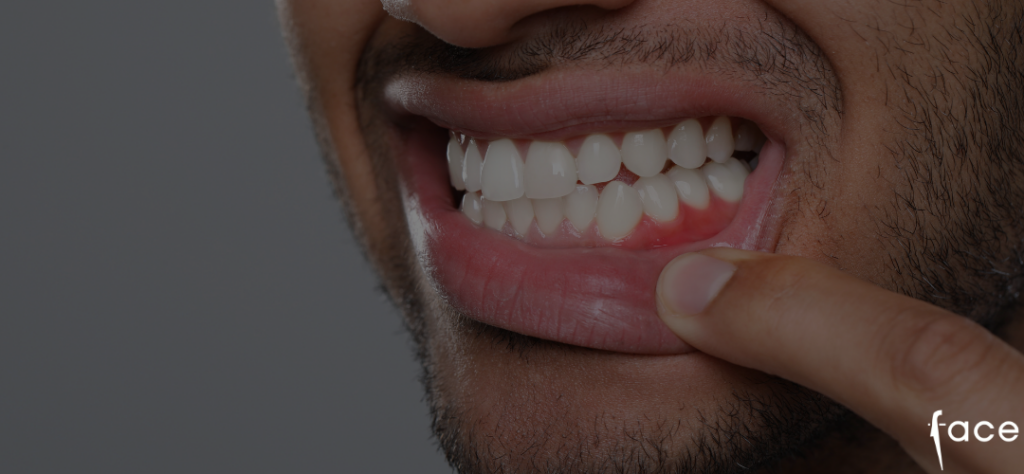
If your gums are red, swollen, sore when you touch them, or bleeding when you brush, they are inflamed. That is the simple version.
The more useful question is why are my gums inflamed, because the answer is not always the same and it is not always as obvious as you might think. Most of the time, inflamed gums trace back to one source: plaque that has been left undisturbed long enough for the bacteria in it to trigger an immune response. But inflammation of the gum tissue can also be driven by hormonal changes, certain medications, medical conditions, nutritional deficiencies and lifestyle factors, sometimes in combination.
Getting the right answer matters, because the treatment for gum inflammation that is purely plaque-driven is different from the treatment for inflammation driven by a systemic factor. And the consequences of leaving inflamed gums unaddressed, regardless of what is driving them, are significant.
At Face Dental in Coventry, a practice built on two generations of dental expertise, we assess gum health as a core component of every clinical examination. Led by Dr Abdul Osman GDC: 231996, who holds international roles with the ITI and BAIRD and serves as key opinion leader for Bredent copaSKY implants and Meisinger surgical instruments, the clinical standard applied to gum assessment is the same as is applied to any complex restorative case. Here is the complete picture.
What gum inflammation actually is
The technical term is gingivitis: inflammation of the gingiva (gum tissue). It is the body’s immune response to the presence of bacterial toxins at the gum line. Understanding the mechanism makes the whole picture clearer.
Plaque is a biofilm of bacteria that forms on every tooth surface continuously. The bacteria most implicated in gum inflammation, particularly gram-negative species including Prevotella intermedia, Fusobacterium nucleatum and Porphyromonas gingivalis, produce lipopolysaccharides (LPS) and other toxins that penetrate the sulcular epithelium, the thin tissue lining the groove between the tooth and gum.
The immune system responds to these toxins by increasing blood flow to the area, dilating blood vessels, and recruiting inflammatory cells including neutrophils and macrophages. This vascular response is what produces the visible changes: the redness, swelling and heat that characterise inflamed gums. The dilated blood vessels close to the gum surface are why the tissue bleeds easily on contact.
At this early stage, the inflammation is confined to the gum tissue itself. The bone beneath and the periodontal ligament attaching the gum to the root are not involved. This is the key distinction between gingivitis and periodontitis, and the reason gingivitis is reversible while periodontitis is not.
Why are my gums inflamed? The causes
Gum inflammation has a primary cause in most cases and often one or more contributing factors working alongside it. The table below gives an overview of the most common causes and what they do to the gum tissue.
Cause | How it contributes to gum inflammation |
Plaque accumulation | Bacterial toxins trigger immune response in sulcular tissue |
Tartar (calculus) build-up | Rough, porous surface harbours bacteria that brushing cannot remove |
Hormonal changes | Progesterone increases blood flow to gums, amplifying plaque response |
Certain medications | Calcium channel blockers and anticonvulsants cause gingival overgrowth |
Poorly fitting restoration | Sharp margin traps plaque and traumatises gum tissue |
Dry mouth | Reduced saliva removes protective antibacterial proteins |
Vitamin C deficiency | Impairs collagen synthesis; gum tissue becomes fragile and bleeds |
Smoking | Masks bleeding but impairs gum vasculature and immune response |
Diabetes (poorly controlled) | Impairs immune function; worsens gum response to bacteria |
Stress | Elevates cortisol; suppresses immune response to oral bacteria |
Each of these is discussed in detail below.
Plaque and tartar: the primary drivers
The single most common cause of inflamed gums is plaque that has not been adequately removed. This is not just about whether someone brushes, but about whether they are cleaning the right areas with the right technique.
The gum margin and the interdental spaces between the teeth are where plaque accumulates most aggressively and where it is most difficult to remove. The toothbrush reaches the buccal (cheek-facing) and palatal surfaces of the teeth reasonably well. It does not reach into the contacts between adjacent teeth, and it does not extend into the gum sulcus.
When plaque at the gum margin is not disrupted daily, it matures. Within 24 to 72 hours, early plaque is colonised by more pathogenic species. Within a week or two of undisturbed accumulation, the gum tissue responds with the inflammatory changes that produce the swelling, redness and bleeding that characterise inflamed gums.
Over time, plaque that is not removed mineralises into tartar (calculus). Tartar is hard, rough and cannot be removed by brushing. It provides an ideal habitat for the bacteria driving gum inflammation and holds them in continuous contact with the gum margin. Once tartar has formed, it can only be removed by a dental hygienist using professional scaling instruments. This is the point at which home cleaning alone becomes insufficient to resolve the inflammation.
Hormonal causes of inflamed gums
Hormones significantly influence how the gum tissue responds to bacterial challenge. This is why inflamed gums often appear or worsen during specific hormonal events, even when oral hygiene has not changed.
Pregnancy: Pregnancy gingivitis is a well-documented and common condition. The elevated progesterone levels of pregnancy increase blood flow to the gum tissue and alter the local immune response, making the gums react more dramatically to the same level of plaque that previously caused only mild inflammation. The gums may appear significantly swollen, red and bleed very readily during pregnancy, even in patients with good oral hygiene. This is not a sign that something has gone wrong with the pregnancy; it is a predictable hormonal effect on gum tissue. Professional cleaning by a dental hygienist during pregnancy is both safe and clinically recommended: it reduces the severity of the gum response and helps prevent progression to more advanced gum disease.
Puberty: The hormonal surge of puberty similarly increases gum tissue reactivity to plaque in teenagers, producing an exaggerated inflammatory response.
Menstrual cycle: Some women notice gum soreness or swelling that corresponds to specific points in the menstrual cycle, most commonly in the days before menstruation. This is a progesterone-mediated effect and typically resolves as the cycle progresses.
Menopause: Hormonal decline in the perimenopausal period is associated with reduced salivary flow, altered tissue composition and, in some patients, gum discomfort and increased susceptibility to inflammation.
Medication effects on gum tissue
Several categories of medication cause changes in gum tissue that can present as swelling, overgrowth or increased bleeding.
Calcium channel blockers: Amlodipine and nifedipine, commonly used for hypertension and cardiovascular conditions, cause gingival overgrowth (drug-induced gingival enlargement) in a proportion of patients. The gum tissue appears enlarged, sometimes substantially, covering more of the tooth surface than it should. The overgrowth is worsened by the presence of plaque, which is why scrupulous oral hygiene and regular professional cleaning can significantly reduce its severity. The effect is not fully reversible without changing or stopping the medication, and discussion with the prescribing doctor is appropriate.
Anticonvulsants: Phenytoin (used for epilepsy) is one of the most commonly cited causes of gingival overgrowth. The severity correlates with plaque levels.
Immunosuppressants: Ciclosporin, used in organ transplant patients to prevent rejection, produces gingival overgrowth as a dose-related side effect.
Blood thinners: Anticoagulant and antiplatelet medications do not cause inflammation directly, but they reduce the clotting response. Gum tissue that would bleed a small amount with minimal inflammation in a non-medicated patient may bleed more significantly and more persistently in a patient on warfarin, apixaban or aspirin.
Medical conditions and their gum effects
Diabetes: Poorly controlled diabetes impairs neutrophil function, the front-line immune cells that normally fight the bacteria causing gum disease. This means diabetic patients with inadequate glucose control develop more severe gum inflammation in response to the same bacterial challenge, and the disease progresses faster. The relationship is also bidirectional: treating gum disease produces measurable improvement in glycaemic control (HbA1c levels), reinforcing the importance of treating inflamed gums in diabetic patients as a component of their overall health management.
Vitamin C deficiency: Vitamin C is essential for collagen synthesis, which is the basis of gum tissue architecture. Deficiency causes the collagen in gum tissue to degrade, making the tissue fragile, easily damaged and prone to bleeding. Classic scurvy, causing severe gum changes, is rare in the UK, but moderate vitamin C insufficiency is more common than recognised.
Smoking and gum inflammation
Smoking is one of the most significant risk factors for gum disease, yet it complicates the clinical picture in a counter-intuitive way: smoking causes vasoconstriction, reducing blood flow to the gum tissue. This masks one of the primary signs of gum inflammation (bleeding), because the reduced blood flow means the engorged blood vessels that bleed easily in non-smokers are not present to the same degree.
A smoker may have significant underlying gum disease and bone loss with minimal bleeding, leading them to believe their gums are healthy when they are not. This is why a proper clinical assessment by a dental hygienist or dentist, including pocket depth measurement and X-rays, is essential rather than relying on bleeding as the indicator. The assessment tells the truth; the symptoms in smokers do not.
When inflamed gums stop being reversible: the progression to gum disease
Gingivitis, left untreated, does not necessarily progress to periodontitis. Whether it does depends on the individual’s immune response, the specific bacterial species present, genetic factors, and the presence of risk factors like smoking and poorly controlled diabetes.
But it can progress, and when it does, the consequences are structurally permanent.
In periodontitis, the infection extends below the gum line. The bacteria access the deeper periodontal structures, and the immune response to them begins to destroy the bone supporting the teeth. This bone loss is not reversed by cleaning alone. It can be halted with appropriate treatment, but it cannot be undone.
The critical clinical distinction: gingivitis produces inflamed, bleeding gums but no change in the attachment between the gum and the tooth root, and no bone loss. Periodontitis produces attachment loss and bone destruction. Clinically this is detected by measuring gum pocket depths around every tooth. Depths above 3mm that bleed on probing indicate that the inflammation has progressed beyond simple gingivitis.
This distinction is made at a dental check-up where proper periodontal assessment is carried out.
How inflamed gums are treated
At home
The foundation remains brushing twice daily with a soft brush, interdental cleaning every day, and spit-but-do-not-rinse after fluoride toothpaste to allow maximum contact time with the enamel. For hormonally driven inflammation, the bacterial trigger is still present even when the hormones are the amplifying factor, so home cleaning remains essential.
Professional cleaning: the hygienist appointment
When tartar is present, or when the inflammation has not resolved with improved home care, a dental hygienist appointment is the appropriate clinical response. The hygienist removes tartar from above and below the gum line using ultrasonic and hand instruments, performs air polishing to clear surface staining and biofilm, and provides specific, personalised instruction on the areas being missed at home. For most cases of gingivitis, two to four weeks of thorough home care following professional cleaning produces complete resolution of the inflammation.
Gum disease treatment
Where the inflammation has progressed to periodontitis, with pocket depths above 3mm and attachment loss, gum disease treatment involving root surface debridement (deep cleaning beneath the gum line) is the appropriate clinical response. This is typically carried out under local anaesthetic and may require multiple appointments to treat all areas. The inflammation resolves as the bacterial load beneath the gum line is reduced. Pocket depths reduce as the gum tissue firms and re-attaches where conditions allow.
Ongoing maintenance appointments at Face Dental at three to four monthly intervals then become the long-term management framework.
Signs that inflamed gums need urgent assessment
Most inflamed gums are a chronic, slowly developing condition that can be assessed at a routine appointment. The following presentations need same-day or prompt care:
A dental abscess alongside gum inflammation: severe localised pain, swelling of the gum or face, a bad taste, and possibly fever. This is urgent. Contact Face Dental or seek emergency dental care.
Rapidly spreading gum swelling: if gum swelling is increasing quickly and affecting swallowing or breathing, seek emergency medical care.
Sudden severe gum pain with ulceration: acute necrotising ulcerative gingivitis (ANUG) produces severe pain, characteristic punched-out ulcers at the gum tips, bad breath and grey tissue. This needs same-day dental treatment.
For any of these presentations, call Face Dental on 02476 501 125 or use our contact page to reach the team.
In conclusion
Inflamed gums are common, but common does not mean they should be ignored. Why are my gums inflamed has a different answer for different patients: plaque, tartar, hormones, medication, systemic conditions and lifestyle factors all play a role, often in combination.
The treatment that resolves the inflammation depends on identifying what is driving it. A dental check-up with proper periodontal assessment establishes what is happening clinically. A hygienist appointment removes what home cleaning cannot. Where disease has progressed, gum disease treatment addresses the deeper infection.
At Face Dental in Coventry, 76 Quinton Rd, CV3 5FD, all of this is available in one place, led by a team with the clinical expertise to assess, treat and maintain your gum health properly. Call 02476 501 125 or get in touch online.
Disclaimer
The information in this article is intended for general educational guidance only and does not constitute personalised dental advice. For concerns about gum inflammation or gum health, please book an appointment with a qualified dental professional for a proper clinical assessment.
Face Dental is a private dental practice at 76 Quinton Rd, Coventry, CV3 5FD, a family legacy built on two generations of dental expertise, led by Dr Abdul Osman GDC: 231996, international lecturer for the ITI and BAIRD and key opinion leader for Bredent copaSKY implants and Meisinger surgical instruments. We offer gum disease treatment, dental check-ups, dental hygienist appointments, Invisalign, composite bonding, porcelain veneers, teeth whitening, dental crowns, dental implants, smile makeovers, facial aesthetics and emergency appointments. Call 02476 501 125 or contact us online.
Frequently asked questions
Why are my gums inflamed even though I brush every day?
Brushing removes plaque from the tooth surfaces, but it does not reach into the interdental spaces between the teeth or into the gum sulcus. These are exactly the areas where plaque accumulates most aggressively and where gum inflammation begins. If interdental cleaning with floss or interdental brushes is not part of the daily routine, the spaces between the teeth are never cleaned, and gum inflammation in those areas is the predictable consequence. A dental hygienist appointment can identify which specific areas are being missed and provide tailored guidance on improving technique and tools.
Can inflamed gums resolve without seeing a dentist?
If the inflammation is in its early stage, is caused purely by plaque, and the patient significantly improves their home care by adding daily interdental cleaning and ensuring thorough brushing technique, it is possible for the inflammation to resolve without professional treatment. However, where tartar has formed, home cleaning cannot address it, and professional removal is necessary. Where the inflammation has persisted for more than two to four weeks despite improved home care, or where bleeding is heavy, there is swelling, or pockets are deepening, a dental check-up is appropriate.
My gums have been inflamed throughout my pregnancy. Is this normal?
Yes, pregnancy gingivitis is a recognised and common condition. Elevated progesterone amplifies the gum tissue’s inflammatory response to plaque, producing inflammation that is disproportionate to the level of plaque present. It does not indicate a problem with the pregnancy, and it is not an emergency. However, it should not be ignored: a dental hygienist appointment during pregnancy reduces the severity of the inflammation and helps prevent progression to more significant gum disease. Professional dental care during pregnancy, including cleaning and assessment, is completely safe.
My gums are swollen on one side only. What could cause that?
Localised swelling on one side typically indicates a localised cause rather than generalised gum disease. The most common possibilities are a dental abscess (from decay or infection of a specific tooth), a periodontal abscess (from a pocket in the gum alongside a specific tooth), a poorly fitting crown or filling creating a plaque trap, or pericoronitis from a partially erupted wisdom tooth. Localised swelling that is increasing, painful, producing a bad taste or accompanied by fever should be assessed urgently. Contact Face Dental promptly if any of these features are present.
How often should I have a hygienist appointment for healthy gums?
For a patient with healthy gums and no history of gum disease, a dental hygienist appointment every six months, aligned with their six-monthly dental check-up, is the standard recommendation. For patients with a history of gum disease or periodontitis, three to four monthly hygienist appointments are the appropriate maintenance interval to prevent reactivation of the disease. For patients with active risk factors such as smoking, poorly controlled diabetes or medication-induced gum changes, the frequency is assessed individually based on the clinical findings at each appointment.