
Retainers for teeth
What they are, why they matter more than most people realise, and how to keep them working
Orthodontic treatment ends on the day you finish wearing your last aligner or have your braces removed. Retention — the phase that keeps your teeth in their new positions — never really does.
This is the part that surprises many people. There is a widespread assumption that once the teeth have moved into the correct position, they will stay there permanently. They will not. Without consistent retainer wear, teeth move. Sometimes quickly, sometimes slowly — but they move. The degree of relapse varies enormously between individuals, but the direction of travel is almost universally back towards the original position.
Retainers for teeth are not a temporary afterthought to orthodontic treatment. They are a permanent and essential phase of it. Understanding why gives you the motivation to wear them consistently. Understanding what your options are gives you the tools to do it effectively.
At Face Dental in Coventry — a practice built on two generations of dental expertise, led by Dr Abdul Osman GDC: 231996, international lecturer for the ITI and BAIRD and key opinion leader for Bredent copaSKY implants — teeth retainers and the long-term stability of orthodontic results are a core part of how we approach cosmetic treatment. Here is everything worth knowing.
Why teeth move in the first place — and why that never really stops
To understand why retainers after straightening are necessary indefinitely rather than just for a few months, it helps to understand the biology of tooth movement.
Teeth are not rigidly set into the jaw the way a screw goes into a wall. They are suspended in a socket by the periodontal ligament — thousands of tiny collagen fibres that connect the root surface to the surrounding bone, functioning like a sophisticated shock absorber that allows a small degree of physiological movement in every direction.
During orthodontic treatment, controlled forces are applied to the teeth through aligners or brackets and wires, and these forces cause the periodontal ligament to compress on one side and stretch on the other. Bone resorbs on the pressure side and is deposited on the tension side. Over weeks and months, the tooth moves through the bone as the supporting structures are remodelled.
The critical point: this remodelling process does not complete the moment the tooth reaches its target position. The periodontal ligament fibres take time to reorganise in their new arrangement — research suggests this takes anywhere from six months to a year for initial stabilisation. The bone around the roots takes longer still to fully mature in its new conformation.
And there is an additional complicating factor: the natural forces acting on the teeth never stop. The tongue pushing from the inside, the lips and cheeks pressing from the outside, the forces of biting and chewing, and the gradual changes that come with ageing — all of these continuously apply force to the teeth. Without a retainer holding them in position, the path of least resistance is back towards where they came from.
This is not a flaw in orthodontic treatment. It is the normal behaviour of biological tissue, and it is why every responsible orthodontic course of treatment ends with a retention phase that is, in the strictest clinical sense, lifelong.
The types of teeth retainers available
There are two fundamental categories of retainer, each with meaningful advantages and limitations. The right choice depends on the type of treatment completed, the degree of movement achieved, the specific anatomy of the teeth, and individual lifestyle factors.
Fixed retainers (bonded wire retainers)
A fixed retainer is a thin, braided or twisted wire bonded directly to the back surface of the teeth — typically across the lower front six teeth, and sometimes the upper front teeth as well. It is entirely invisible when smiling, completely passive once placed, and requires no action from the patient to be effective.
What makes them effective: Because a fixed retainer works continuously without any patient compliance required, it is the most reliable option available — particularly for the lower front teeth, which are among the most relapse-prone following orthodontic treatment.
The honest limitations: Fixed retainers require more diligent oral hygiene. Plaque accumulates around the wire and bonding points, and interdental cleaning beneath the wire requires either floss threaders, superfloss or a water flosser — standard interdental brushes cannot pass under the wire. Patients who do not adapt their cleaning routine often develop tartar build-up and localised gum disease around the retainer. Additionally, the wire can occasionally detach from one or more teeth — sometimes without the patient noticing — which means the tooth is no longer held and may begin to drift. Regular dental check-ups are important specifically for this reason: the clinical team can check the integrity of the bonded retainer at each visit.
Lifespan: Fixed retainers can last many years if properly maintained and not damaged. Diet considerations apply — very hard foods (crunching ice, biting on hard bread crusts) can dislodge the bonding.
Removable clear retainers (Essix retainers)
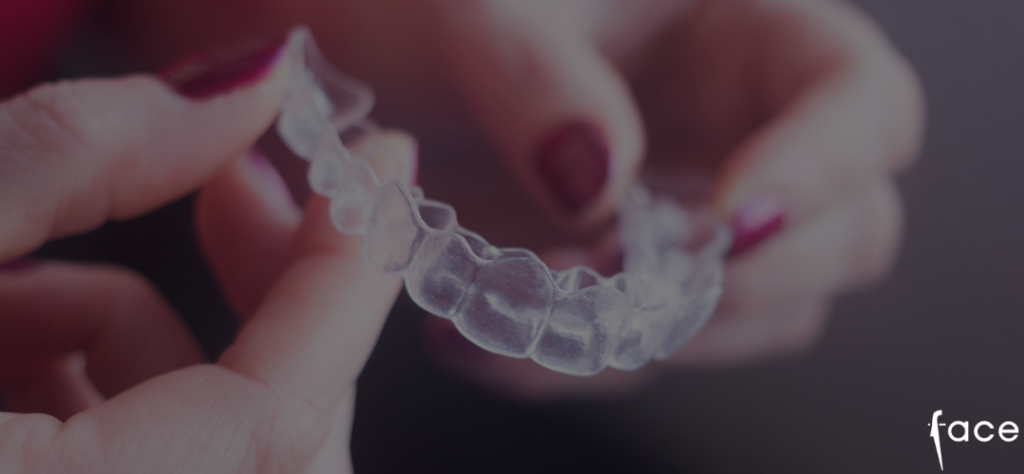
A clear retainer — sometimes called an Essix retainer, a vacuum-formed retainer or a clear overlay retainer — is a thin, transparent plastic tray that fits over the teeth, very similar in appearance and feel to an Invisalign aligner.
What makes them effective: Clear retainers are comfortable, discreet, easy to clean, and do not interfere with oral hygiene in the way a bonded wire does. For patients who want flexibility and simplicity, they are an excellent option. They also have the advantage of maintaining both the position and the alignment of the bite, not just individual tooth positions.
The honest limitations: Clear retainers are only effective when they are being worn. Patient compliance is everything — and the number of patients who wear their retainers consistently long-term is, in reality, lower than the number who begin with good intentions. A retainer that is not worn is not retaining anything.
Clear retainers are also subject to wear over time. The plastic becomes less rigid, can crack, and will eventually need replacing. They can also stain if exposed to coloured drinks while in the mouth.
Lifespan: Typically two to five years before replacement is needed, depending on the material used and how carefully they are treated.
Hawley retainers
A Hawley retainer is a more traditional removable retainer — an acrylic plate fitting against the roof of the mouth or the floor of the mouth, with a metal wire across the front of the teeth. Hawley retainers are less commonly prescribed now that clear Essix retainers are widely available, but they have specific advantages: they are durable, adjustable (the wire can be fine-tuned by the clinician), and relatively easy to repair. For some complex cases, they remain the most appropriate choice.
When and how long to wear retainers after straightening
The wear schedule for retainers after straightening evolves over time and should be discussed specifically with your treating clinician. The general progression is:
- First three to six months (the most critical period): Full-time wear is typically recommended for removable retainers — 22 hours per day, removing only to eat and clean the teeth. This is the period during which the bone and periodontal ligament are most actively reorganising around the new tooth positions, and the risk of relapse without continuous support is highest.
- Six months to two years: Many clinicians recommend transitioning to nighttime-only wear once the initial stabilisation period is established. The teeth are still vulnerable, but the forces acting during sleep are manageable with nightly use.
- Beyond two years and indefinitely: Nightly wear, ongoing. This is the phase most patients underestimate. The teeth continue to be subject to natural forces throughout life — particularly the slow, continuous change in tooth position and arch form that is part of normal ageing. Patients who stop wearing retainers completely after two years frequently experience some degree of relapse over the following years. Those who maintain nightly wear do not.
The honest way to frame this: wearing a retainer every night for the rest of your life is not a burden — it takes approximately 30 seconds to insert and 30 seconds to remove, costs nothing once the retainer is made, and is the only thing standing between your current result and relapse.
Cleaning and looking after your retainer
A retainer that is not cleaned regularly becomes a reservoir for bacteria, calculus and oral pathogens. This is not just an aesthetic concern — accumulated bacteria on an unwashed retainer are in continuous contact with the gum tissue and tooth surface when the retainer is worn.
For clear removable retainers:
Clean the retainer every morning when you take it out. Use a soft toothbrush and cool water — not toothpaste, which is abrasive enough to scratch the plastic surface and create microscopic grooves where bacteria accumulate. A mild retainer cleaning solution or a diluted dental cleaner can be used for occasional soaking.
Keep retainers away from heat. Warm water, leaving them on a sunny windowsill, or storing them in a car — all of these warp the plastic and affect the fit. Always use cool or cold water.
Store the retainer in its case when not in use, and keep it somewhere visible so it becomes part of the evening routine rather than something forgotten about.
For bonded wire retainers:
The cleaning challenge with a bonded retainer is the wire itself. The space beneath the wire needs to be cleaned daily — superfloss (which has a stiffened end that can be threaded under the wire), floss threaders, or a water flosser are all appropriate tools. The bonding points where the wire attaches to the tooth surface are particularly prone to plaque accumulation.
The dental hygienist can identify areas of build-up around a bonded retainer at each appointment and clean them professionally. This is one of the practical reasons regular hygiene visits are particularly important for patients with fixed retainers.
What happens if you stop wearing your retainer
The degree of relapse that follows discontinuing retainer wear varies enormously between individuals. Some people stop wearing their retainer for a year and notice very little change. Others notice visible movement within weeks.
What determines this variation includes: how much the teeth were moved during treatment, the elasticity of the periodontal ligament, the ongoing pressure from the tongue and lips, the presence or absence of wisdom teeth, and individual genetic factors affecting tooth position.
What does not vary is the direction: without a retainer, teeth tend to move towards their original positions rather than in a random direction. The memory of their pre-treatment position is not a myth — it reflects the fact that the forces that drove them into that position (tongue pressure, lip pressure, the shape of the arch) have not changed. Only the retainer is providing a counterbalancing force.
If you have stopped wearing your retainer and have noticed some shift in tooth position, book a dental check-up as soon as possible. In many cases, if the movement is caught early, a new retainer made from a scan of the current tooth position can hold the teeth where they are — preventing further movement even if it cannot fully reverse what has already occurred. If movement has been significant, a short course of retreatment followed by a new retention protocol may be the appropriate path.
Retainers and teeth whitening: a useful combination
Clear removable retainers have a dual function that many patients do not know about: they can also be used as whitening trays.
The fit of a well-made Essix retainer is very close to the fit of a custom whitening tray. If professional teeth whitening is something you are considering after completing your orthodontic treatment — which is an excellent sequence, as whitening after straightening produces the most dramatic overall result — the clear retainers can often double as the vehicle for home whitening gel, reducing the cost and complexity of the process.
This does need to be confirmed with your clinician, as the fit and material of the retainer affects whether it is suitable for this purpose. At Face Dental in Coventry, teeth whitening following Invisalign treatment is a common and effective combination — the sequence of straightening followed by whitening, with the retainer doing double duty, is one of the most efficient pathways to a comprehensive smile improvement.
Retainers after Invisalign specifically
If your orthodontic treatment was carried out with Invisalign, retainers are included as part of the treatment package in most comprehensive Invisalign plans. The Vivera retainer — Invisalign’s proprietary retention system — is made from a thicker, more durable material than the aligners and is designed specifically for long-term retention rather than active tooth movement.
Vivera retainers are fabricated in sets of four (provided as pairs), which means you have replacement retainers ready when the first set wears out. This built-in replacement plan is one of the advantages of the Vivera system over standard Essix retainers.
Beyond the Vivera retainers, the considerations are the same as for any other clear retainer system: clean them consistently, store them correctly, and wear them every night.
Retainers alongside other cosmetic treatment
Composite bonding: Composite bonding is often completed after orthodontic treatment, to refine the shape, edge detail or colour of teeth that are now correctly aligned. Where bonding is placed after alignment is complete, the retainer continues to be worn — composite bonding does not affect retainer fit or function in most cases.
Porcelain veneers: Where veneers are planned after orthodontic treatment, the retainer situation is reassessed at the restoration stage, as the veneer changes the shape of the tooth that the retainer fits over. New retainers are typically made after veneers are placed.
The sequencing of Invisalign, whitening, and composite bonding as part of a comprehensive smile transformation is something we plan carefully at Face Dental — ensuring each element is completed in the right order to achieve the best combined result.
The bottom line
Retainers for teeth are not the end of orthodontic treatment — they are the part that makes the treatment permanent. Teeth retainers worn consistently every night preserve the result that months of treatment produced. Retainers after straightening that are neglected or worn inconsistently allow that result to fade, gradually and often imperceptibly, until the change becomes visible and frustrating.
The investment in orthodontic treatment — of time, cost and commitment — is significant. Retainer wear is what protects that investment indefinitely, at almost no ongoing cost. There is no better return on dental care than this.
At Face Dental in Coventry, Dr Abdul Osman GDC: 231996 and the team provide thorough retention planning as part of every orthodontic treatment — and we are happy to advise on retainers, replacement and retention protocol at any point. Call 02476 501 125 or get in touch online.
Disclaimer
The information in this article is intended for general educational guidance only and does not constitute personalised dental advice. For advice specific to your retainer, retention protocol or orthodontic results, please book an appointment with a qualified dental professional.
Face Dental is a private dental practice at 76 Quinton Rd, Coventry, CV3 5FD — a family legacy built on two generations of expertise, led by Dr Abdul Osman GDC: 231996, international lecturer for the ITI and BAIRD and key opinion leader for Bredent copaSKY implants and Meisinger surgical instruments. We offer Invisalign, teeth whitening, composite bonding, dental check-ups, dental implants, porcelain veneers, dental crowns, smile makeovers, facial aesthetics and emergency appointments. Call 02476 501 125 or contact us online.
Frequently asked questions
How long do I need to wear my retainer after teeth straightening?
The honest answer is: indefinitely. The first six months require full-time wear in most cases; after that, nightly wear is the standard long-term recommendation. Teeth continue to be subject to natural forces throughout life, and only a retainer provides a reliable counterbalancing force. Patients who maintain nightly retainer wear do not experience significant relapse. Those who stop do — the timeline varies but the direction is almost always the same. A dental check-up will include a review of your retention status.
What happens if my retainer no longer fits?
If your clear retainer feels tight or does not seat properly, do not force it in — and do not stop wearing it and wait to see what happens. A retainer that does not fit is telling you that your teeth have moved since it was made. Book an appointment at Face Dental as soon as possible. Depending on how much movement has occurred, a new retainer made to the current tooth position may be sufficient to hold things steady; in more significant cases, retreatment followed by new retention is the appropriate path.
Can I use my Invisalign retainer for teeth whitening?
Often yes — clear Essix and Vivera retainers can frequently double as whitening trays, making professional teeth whitening more straightforward after Invisalign treatment. The suitability depends on the fit and material of the specific retainer. Discuss this at your retention review and the team will advise on whether your retainer is appropriate for this purpose or whether a dedicated whitening tray would serve you better.
How do I clean my retainer properly?
For clear removable teeth retainers: brush with a soft toothbrush and cool water every morning when you remove it. Avoid toothpaste (it scratches the surface), avoid warm water (it warps the plastic), and avoid leaving it exposed to heat or direct sunlight. Store in its case when not in the mouth. For bonded wire retainers for teeth: clean beneath the wire daily using superfloss, floss threaders or a water flosser, and have the bonding points checked and professionally cleaned at each dental check-up.
I stopped wearing my retainer and my teeth have moved. What are my options?
It depends on how much movement has occurred. If it is recent and mild, a new retainer fitted to the current tooth position can prevent further relapse even if it cannot fully reverse what has already occurred. If the movement is significant, a short retreatment course — sometimes just a few weeks or months of Invisalign — followed by a new retention protocol is the appropriate route. The most important step is not to wait for it to worsen. Get in touch and book an assessment — the sooner it is addressed, the more options are available.